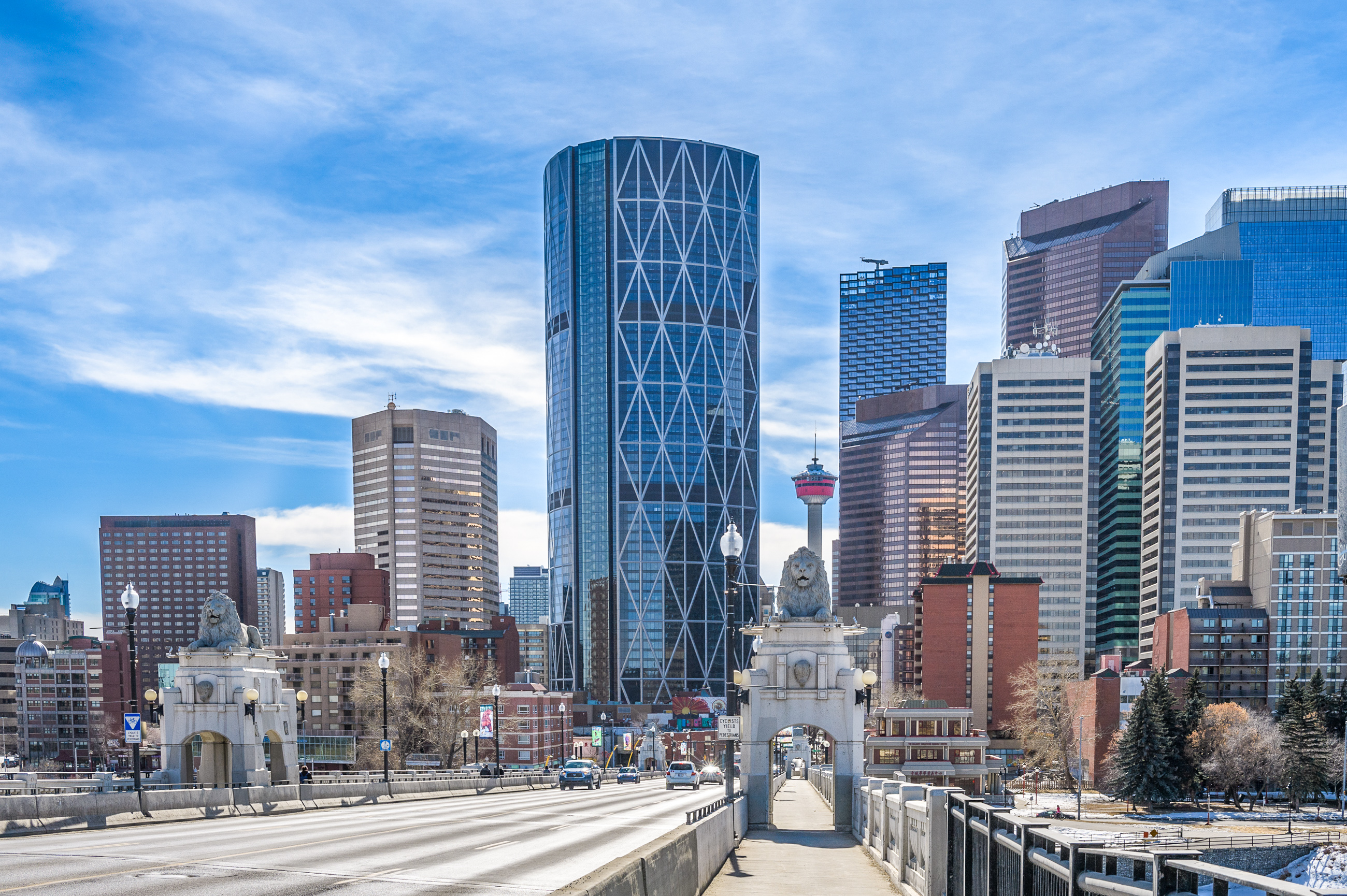
Green Line LRT | ?m | ?s | Calgary Transit

Go Elevated or try for Underground?

  • Work with the province and go with the Elevated option

    Votes: 66 66.7%
  • Try another approach and go for Underground option

    Votes: 29 29.3%
  • Cancel it altogether

    Votes: 1 1.0%
  • Go with a BRT solution

    Votes: 3 3.0%

  • Total voters
    99
Curiously RouteAhead specifically mentioned that having the Green Line reduced the need for the 8th Avenue tunnel. They believe that the South LRT currently services a lot of SE ridership and that they will switch to the Green Line when it reaches those riders. It's always been strange to me that the planners have been so determined for a tunnel for the Green Line while pushing back on the 8th Avenue tunnel when the latter tunnel would benefit way more riders.

syBYo0d.png
That's interesting.

I wonder what percentage of trips on the red line draw ridership from the east side of the Bow River? I would guess that it can't be that much...around 5-10% or so?
 
That's interesting.

I wonder what percentage of trips on the red line draw ridership from the east side of the Bow River? I would guess that it can't be that much...around 5-10% or so?
It was enough that when Greenline became LRT with a quick access downtown tunnel, enough demand shifted to push back the Red Line tunnel by 30+ years.
 
Rode the single car tram or whatever they call it in Amsterdam. Worked pretty well using just one car and it meant stations were small and the frequency of the service meant you didn't have to look at a schedule at all.

There's obviously a reason we decided to do two cars and larger stations; it is a bit of bridge from our existing from our existing LRT experience to a streetcar, but I'm wondering if we missed an opportunity in choosing to go that route. One-car trains would mean more drivers but you would find hundreds of millions if not a billion dollars in savings compared to accommodating two-car trains, the larger stations those require, and needing to go underground/elevated. Maybe it wouldn't have changed much for the SE portion, but where I think it would've changed things is from 4th Street or Grand Central Station into the core and up Centre Street. You could run it at street level and avoid the whole underground/elevated debate. There's always risk with running LRT service that interacts with vehicles, but I think the benefits far outweigh those risks.

I'm obviously missing something and I'm sure someone will let me know what it is.
 
Rode the single car tram or whatever they call it in Amsterdam. Worked pretty well using just one car and it meant stations were small and the frequency of the service meant you didn't have to look at a schedule at all.

There's obviously a reason we decided to do two cars and larger stations; it is a bit of bridge from our existing from our existing LRT experience to a streetcar, but I'm wondering if we missed an opportunity in choosing to go that route. One-car trains would mean more drivers but you would find hundreds of millions if not a billion dollars in savings compared to accommodating two-car trains, the larger stations those require, and needing to go underground/elevated. Maybe it wouldn't have changed much for the SE portion, but where I think it would've changed things is from 4th Street or Grand Central Station into the core and up Centre Street. You could run it at street level and avoid the whole underground/elevated debate. There's always risk with running LRT service that interacts with vehicles, but I think the benefits far outweigh those risks.

I'm obviously missing something and I'm sure someone will let me know what it is.
It's a fundamentally different service. Ideally we'd have high floor LRT feed the commuting traffic and localized LRT crisscrossing downtown/beltline for local movement, but we need the LRT to function as a commuter service and local service all in one. Trams also work in Europe because they don't run in mixed traffic, and in general car volume there are significantly lower. Plopping a tram service in our downtown, you get the situation with Toronto where there is trams (streetcar) exactly as you describe going around downtown but it's an absolute mess. The trains are extremely slow because they're unable to change lanes so a single left turn car, improper parked car, accident, etc. blocks the entire streetcar. There's literally constant repair or construction so at least one or more streetcar routes are on detour at any given time. Detours are very annoying because it turns a straight journey and adds two connections (streetcar-shuttle bus - streetcar) which could go smoothly, or add 40 minutes to your journey and there's no reliable way to know.

Reliable bus service is far better than what a tram offers, especially in mixed traffic.
 
It's a fundamentally different service. Ideally we'd have high floor LRT feed the commuting traffic and localized LRT crisscrossing downtown/beltline for local movement, but we need the LRT to function as a commuter service and local service all in one. Trams also work in Europe because they don't run in mixed traffic, and in general car volume there are significantly lower. Plopping a tram service in our downtown, you get the situation with Toronto where there is trams (streetcar) exactly as you describe going around downtown but it's an absolute mess. The trains are extremely slow because they're unable to change lanes so a single left turn car, improper parked car, accident, etc. blocks the entire streetcar. There's literally constant repair or construction so at least one or more streetcar routes are on detour at any given time. Detours are very annoying because it turns a straight journey and adds two connections (streetcar-shuttle bus - streetcar) which could go smoothly, or add 40 minutes to your journey and there's no reliable way to know.

Reliable bus service is far better than what a tram offers, especially in mixed traffic.
Then don't mix it with traffic? Separate it with physical barriers. The ship has sailed on so there's no point in having this conversation, unless maybe people think it is something you could do on the northern portion?

Run less frequent two-car trains in the SE into the core on 2nd Street to a 7th Ave Station then a more frequent one-car service on 2nd Street from 7th Ave north. You could even have the one-car train start at Grand Central and have people from the SE transfer to that to get downtown but like I said I think elevated has already been informally decided on.

Not sure if the one car line would be elevated or if the track would be dead ended at 7th Ave, joining them would mean you would only need one storage and maintenance facility, but I think you would need another one anyways with a fully built out line. It would make the northern portion more economical; the MAX Stops are being built out now. It would mean a transfer at 7th Ave if you did want to keep going north or south on the Green Line but I don't know the people who would do that would be turned off by that transfer, especially if it is on to a line that runs every 5 minutes at the least all day and every 2 minutes during peak service.
 
Then don't mix it with traffic? Separate it with physical barriers. The ship has sailed on so there's no point in having this conversation, unless maybe people think it is something you could do on the northern portion?

Run less frequent two-car trains in the SE into the core on 2nd Street to a 7th Ave Station then a more frequent one-car service on 2nd Street from 7th Ave north. You could even have the one-car train start at Grand Central and have people from the SE transfer to that to get downtown but like I said I think elevated has already been informally decided on.

Not sure if the one car line would be elevated or if the track would be dead ended at 7th Ave, joining them would mean you would only need one storage and maintenance facility, but I think you would need another one anyways with a fully built out line. It would make the northern portion more economical; the MAX Stops are being built out now. It would mean a transfer at 7th Ave if you did want to keep going north or south on the Green Line but I don't know the people who would do that would be turned off by that transfer, especially if it is on to a line that runs every 5 minutes at the least all day and every 2 minutes during peak service.
I wasn't referring to the GL specifically, but more so the idea of us having an Amsterdam like tram service you were describing

Whether it's elevated or underground, adding an extra connection to change train types to provide higher service just isn't worth the operational complexity and extra connections. Not aware of anywhere this kind of service exists. Most places simply do a short turn so that not all trains go all the way and some turn back early, but not two different types of trains operating different segments of the same rail line.
 
but not two different types of trains operating different segments of the same rail line
Japan does this not uncommonly, but typically it is due to evolutions of historical anachronisms, not proactive implementation of it as a solution.

I think there are a few instances of tram trains and trams sharing urban segments in Germany as well.
 
Japan does this not uncommonly, but typically it is due to evolutions of historical anachronisms, not proactive implementation of it as a solution.

I think there are a few instances of tram trains and trams sharing urban segments in Germany as well.
There's overlap of different lines, for sure between S and U bahns. But usually those are continuous services as well, just sharing track like the Red/Blue line. Operationally, I haven't really seen a system where the line is fully connected but instead of running a through train, they run a different service in one segment in the middle. I don't think the higher frequency of this central section makes up for all the inconvenience for through traffic (have to change trains to just continue straight). There's systems that run a smaller central service (not every train goes to terminus), or an express service, which I think could work well, especially skipping the stops in the more industrial areas during the morning/afternoon commute. But not sure of any that stops it part way to connect to a different train.
 
I think street running trams could have a place in Calgary, but more of a local neighbourhood circulator that complements the proper LRT network, like they are in Portland and Seattle. Maybe in places like Marda Loop or between University District and Brentwood. Not sure if the "bang-for-buck" is there though, as ridership on such systems is often very low, although it is a lot cheaper than light rail. Similar size metros like KC and Cincinnati use them, in part because they can't seem to get funding for a proper LRT.
 
Last edited:
I think street running trams could have a place in Calgary, but more of a local neighbourhood circulator that complements the proper LRT network, like they are in Portland and Seattle. Maybe in places like Marda Loop or between University District and Brentwood. Not sure if the "bang-for-buck" is there though, as ridership on such systems is often very low, although it is a lot cheaper than light rail. Similar size metros like KC and Cincinnati use them, in part because they can't seem to get funding for a proper LRT.
17th is actually a good candidate. Since there's a red line connection to Vic Park, if it can go down 17th to 14th street, turn down 14th street and turn right at 33/34 for Marda Loop with a final stop at MRU. This has a very low chance of ever happening but there should be enough population to support it and has good connection to LRT and popular areas.
 

Back
Top