Green Line LRT | ?m | ?s | Calgary Transit

Go Elevated or try for Underground?

  • Work with the province and go with the Elevated option

    Votes: 66 66.7%
  • Try another approach and go for Underground option

    Votes: 29 29.3%
  • Cancel it altogether

    Votes: 1 1.0%
  • Go with a BRT solution

    Votes: 3 3.0%

  • Total voters
    99
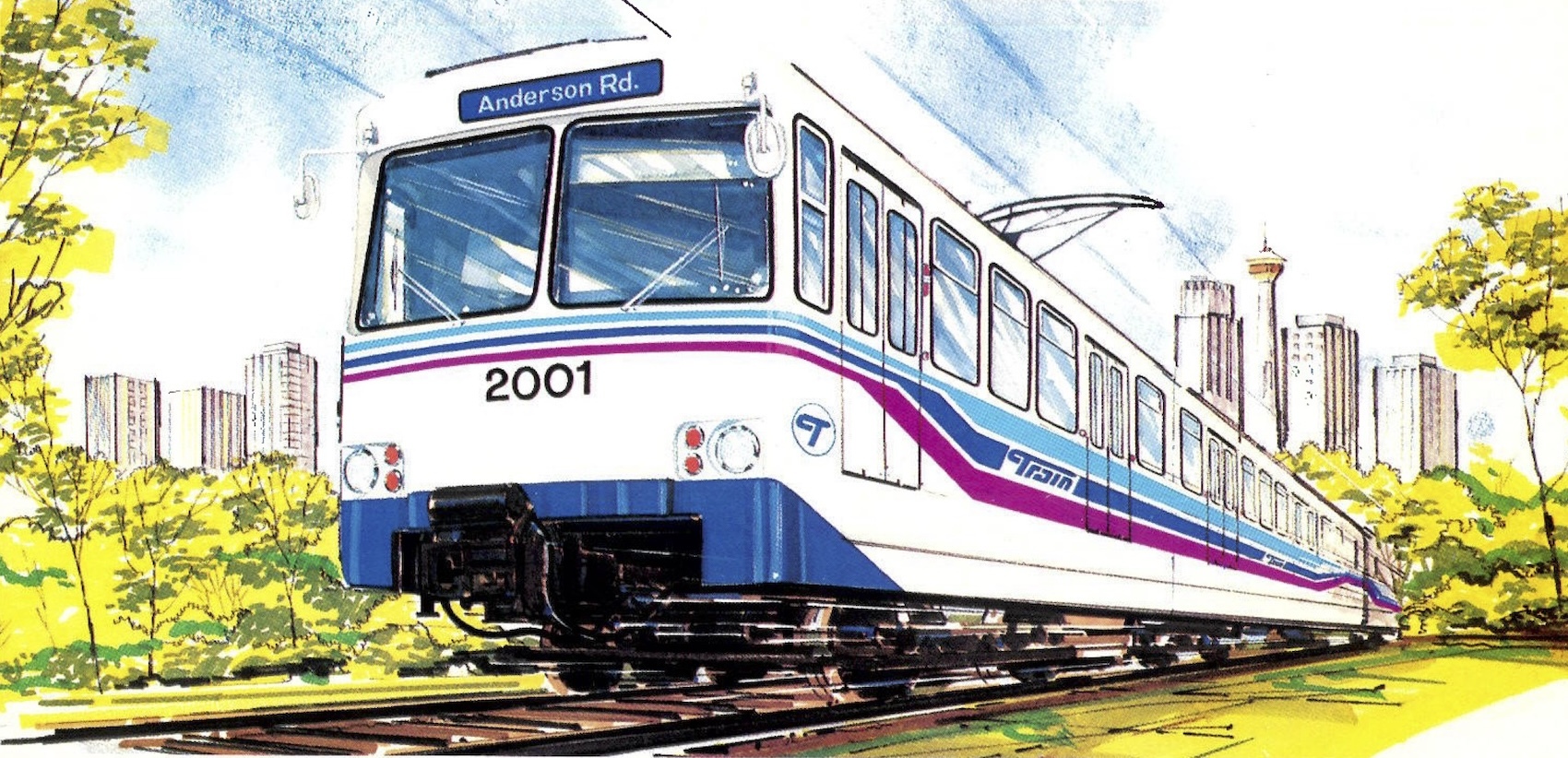
For thsoe who don't read the Sprawl, this image from 1967 floored me. Couldn't have our own Wuppertaler Schwebebahn


View attachment 722456Parking downtown for 15 cents/hour! Wow! Those were the days! I actually don’t park downtown when I need to go. I park at a nearby C train station and take the train in. What is the average surface parking rate in downtown these days? And yes I know I’m missing the point of CalgaryTiger’s post.
 
For those who don't read the Sprawl, this image from 1967 floored me. Could've have our own Wuppertaler Schwebebahn


View attachment 722456
Man...I really wish the city would have built an LRT subway under 7th Ave from day 1. The surface of 7th Ave could have been a transit corridor dedicated solely to buses. As the idiom goes "Shoulda, woulda, coulda".
 
Man...I really wish the city would have built an LRT subway under 7th Ave from day 1. The surface of 7th Ave could have been a transit corridor dedicated solely to buses. As the idiom goes "Shoulda, woulda, coulda".
The mentality that led to the 7th Ave surface train, is exactly why we have an infrastructure deficit. The most important thing is the taxes of the day, the City and City Council are not spending a dime they don't need to are why a pipe blew up. "We can just do it right later; we can make it work for now, plus we get to keep taxes low."
 
Last edited:
The mentality that led to the 7th Ave surface train, is exactly why we have an infrastructure deficit. The most important thing is the taxes of the day, the City and City Council are not spending a dime they don't need to are why a pipe blew up. "We can just do it right later; we can make it work for now, plus we get to keep taxes low."
It's just prioritization. Agreed that a subway train would be ideal. But the trade off would've been Edmonton where they have a smaller network because they spent a lot more on digging tunnels. And these generalized statements about spending, I find the spending actually pretty responsive. It's easy to keep pointing at the watermain, but it failed earlier than it was supposed to. And now that it has failed, the city is fast tracking it's replacement at record speed. We aren't going to keep every piece of infrastructure in tip top shape everywhere, no city does that. You prioritize projects based on their importance and the watermain was not an issue. You can find reports here and there that the watermain was at risk, but you can find similar documents about bridges, roads, sewer pipes, etc. Even if we had raised taxes, there's not enough dollars to maintain everything to a point where accidents don't happen.
 
I think the decision to building on 7th was good. We managed to build a heavily used system, serving around 100 million boardings a year. North America's 2nd busiest LRT, and 10th busiest rail system, light or heavy.

Once the Green Line is done we will have to take a serious look at burying the Red/Blue line through downtown though. I have mixed feelings about burying it.

Pros.
Would allow trains to pass through downtown more quickly. (this is the biggest pro for me)
Stations would be warmer in the winter.

Cons.
I love being able to walk over to a platform and hop on a train without taking 15 minutes to get down to the platform by going down flights of stairs, elbow turns and hallways etc..
I enjoy cruising through downtown looking out the windows watching the people out and about
Underground stations feel stuffy in the summer.
 
I think the decision to building on 7th was good. We managed to build a heavily used system, serving around 100 million boardings a year. North America's 2nd busiest LRT, and 10th busiest rail system, light or heavy.

Once the Green Line is done we will have to take a serious look at burying the Red/Blue line through downtown though. I have mixed feelings about burying it.

Pros.
Would allow trains to pass through downtown more quickly. (this is the biggest pro for me)
Stations would be warmer in the winter.

Cons.
I love being able to walk over to a platform and hop on a train without taking 15 minutes to get down to the platform by going down flights of stairs, elbow turns and hallways etc..
I enjoy cruising through downtown looking out the windows watching the people out and about
Underground stations feel stuffy in the summer.
It's going to be hard to get the political will to bury it. It's going to be probably the most expensive public transit project to date and doesn't serve anyone new. As much as people don't like elevated, could something elevated down 7th work? It's already a transit corridor that the complaints of noise, etc. wouldn't be as big of a factor.
 
I think they made the right choice to keep at-grade and the ridership speaks for itself - the system is immensely popular. Comparing the LRT to the feedermain break does have some similarities though, at least superficially. I don't have any insider knowledge, this is just the vibes I get from how transit plans and decisions are made over the years, and lack of visibility into an overall transit plan for downtown.

That independent report about the feedermain pipe failure spoke to a lot of factors that helped contribute to the failure which I think, Calgary Transit and 7th Avenue / Downtown transit planning share to the long-term capacity, resiliency and health of the transit system. Perhaps they aren't as acute or as life-critical as a water pipe but they can be mapped fairly consistently.

It's the same kind of problems:
  • Distraction with suburban growth and competing priorities - Calgary Transit is classically pulled in a bunch of different directions, where sometimes they focus on growth, sometimes it's maintenance, sometimes it's cutting costs, sometimes it's disruptive political involvement (e.g. the whole Greenline planning process). Lots of effort and funding is given just to get people some basic transit service particularly in rapidly growing suburban areas, little effort is available to optimize and strengthen the existing system. Downtown only periodically receives attention, and long-term major game-changing upgrades are constantly shuffled down the list for new stuff that's easier, cheaper (e.g. bus-only lanes, Stephen Ave subway).
  • Unclear decision authorities downtown - who actually decides what happens with downtown streets? Transit has some wins - 7th Avenue signal priority for example - but other decisions happen without fanfare and with transit losing (e.g. removal of the queue-jump bus turn signal onto Centre Street). Just like the water system, it seems like a murky decision process is occurring where operational teams, roads, and random other inputs are shifting and changing things, sometimes with no real transit benefit. It doesn't seem like there's a "big picture" of what transit is trying to do downtown.
  • Single point of failure - just like the feedermain, 7th Avenue is the backbone of the system with most of the hundreds of thousands of daily riders interacting with it. When it goes down (car accident, pedestrian collision etc.) the whole system is impacted. It might not be as critical as drinking water and delays are usually fixable faster than a pipe, but it's a common occurrence several times a year to have a total system failure for a few hours due to a downtown issue. Had they built a tunnel on 7th Avenue, it would reduce some risks (less collisions) but still be a single-point of failure. Resilience is an obvious trade-off that was made here, perhaps understandably given how expensive building multiple lines or a tunnel would be.
  • Lacking strategic governance to help focus priorities - Transit is at the whims of Council, and competes with other priorities. Just like the water utility, the decisions that happen get rolled-up, consolidated and streamlined to be understandable for a distracted councillor audience. Those decisions and budgets compete with others, so you get weird and someone random levels of Councillor involvement in transit planning decisions, fares and decisions. Meanwhile lots of decisions are happening all the time at the ground-level with little visibility (at least publicly) and are way to technical for a typical council audience to provide regular governance over. This may or may not be a problem, but hard to say without visibility. It's the exact thing that the report found about the water teams which resulted in delaying decisions, optimizing in silos and overall hurting the system because decisions weren't always being made by a technical governance body that could actually help make those strategic trade-off decisions.
That's the big tell for me - it seems like there's no real strategic plan for the future of transit downtown. Yes there's Route Ahead for citywide transit, but it's high-level. Yes, Transit often will mention a Stephen Avenue subway but it's forever 30 years away. What's missing is that next level of detail and public governance - transit-specific reports, statistics, updates, investment plans, strategies etc. - all centralized under a transit-dedicated, publicly visible governance system. Just like the water system, the transit system is too big, complex, technical and important to have the occasional check-in with Council as the main governance process.

When the LRT was proposed they were dealing with the traffic congestion issues of a city of 400,000. We are 1.6 million now, and still planning on using 7th Avenue as the main downtown route for the foreseeable future. Bus lanes are discussed but never formalized. What's the plan here for when we are city of 2 million or maybe 3 million in not too distant future?
 
Last edited:
I think they made the right choice to keep at-grade and the ridership speaks for itself - the system is immensely popular. Comparing the LRT to the feedermain break does have some similarities though, at least superficially. I don't have any insider knowledge, this is just the vibes I get from how transit plans and decisions are made over the years, and lack of visibility into an overall transit plan for downtown.

That independent report about the feedermain pipe failure spoke to a lot of factors that helped contribute to the failure which I think, Calgary Transit and 7th Avenue / Downtown transit planning share to the long-term capacity, resilency and health of the transit system. Perhaps they aren't as acute or as life-critical as a water pipe but they:
  • Distraction with suburban growth and competing priorities - Calgary Transit is classically pulled in a bunch of different directions, where sometimes they focus on growth, sometimes it's maintenance, sometimes it's cutting costs, sometimes it's disruptive political involvement (e.g. the whole Greenline planning process). Lots of effort and funding is given just to get people some basic transit service particularly in rapidly growing suburban areas, little effort is available to optimize and strengthen the existing system. Downtown only periodically receives attention, and long-term major game-changing upgrades are constantly shuffled down the list for new stuff that's easier, cheaper (e.g. bus-only lanes, Stephen Ave subway).
  • Unclear decision authorities downtown - who actually decides what happens with downtown streets? Transit has some wins - 7th Avenue signal priority for example - but other decisions happen without fanfare and with transit losing (e.g. removal of the queue-jump bus turn signal onto Centre Street). Just like the water system, it seems like a murky decision process is occurring where operational teams, roads, and random other inputs are shifting and changing things, sometimes with no real transit benefit. It doesn't seem like there's a "big picture" of what transit is trying to do downtown.
  • Single point of failure - just like the feedermain, 7th Avenue is the backbone of the system with most of the hundreds of thousands of daily riders interacting with it. When it goes down (car accident, pedestrian collision etc.) the whole system is impacted. It might not be as critical as drinking water and delays are usually fixable faster than a pipe, but it's a common occurrence several times a year to have a total system failure for a few hours due to a downtown issue. Had they built a tunnel on 7th Avenue, it would reduce some risks (less collisions) but still be a single-point of failure. Resilience is an obvious trade-off that was made here, perhaps understandably given how expensive building multiple lines or a tunnel would be.
  • Lacking strategic governance to help focus priorities - Transit is at the whims of Council, and competes with other priorities. Just like the water utility, the decisions that happen get rolled-up, consolidated and streamlined to be understandable for a distracted councillor audience. Those decisions and budgets compete with others, so you get weird and someone random levels of Councillor involvement in transit planning decisions, fares and decisions. Meanwhile lots of decisions are happening all the time at the ground-level with little visibility (at least publicly) and are way to technical for a typical council audience to provide regular governance over. This may or may not be a problem, but hard to say without visibility. It's the exact thing that the report found about the water teams which resulted in delaying decisions, optimizing in silos and overall hurting the system because decisions weren't always being made by a technical governance body that could actually help make those strategic trade-off decisions.
That's the big tell for me - it seems like there's no real strategic plan for the future of transit downtown. Yes there's Route Ahead for citywide transit, but it's high-level. Yes, Transit often will mention a Stephen Avenue subway but it's forever 30 years away. What's missing is that next level of detail and public governance - transit-specific reports, statistics, updates, investment plans, strategies etc. - all centralized under a transit-dedicated, publicly visible governance system. Just like the water system, the transit system is too big, complex, technical and important to have the occasional check-in with Council as the main governance process.

When the LRT was proposed they were dealing with the traffic congestion issues of a city of 400,000. We are 1.6 million now, and still planning on using 7th Avenue as the main downtown route for the foreseeable future. Bus lanes are discussed but never formalized. What's the plan here for when we are city of 2 million or maybe 3 million in not too distant future?
The lack of planning or at least public planning is definitely an issue. There's barely any reporting from CTransit on operations, where the delays are, and strategies to improve. I'd caution that just burying the line would result in much better service reliability. Toronto's subway is buried, there's still lots of delays. But to the point of reporting, it took a minute to find this reporting from the TTC and I can't find the same for Calgary Transit.

1773856189213.png
 

Back
Top